How to organize shared craft supplies for children of different ages
· Editorial team newsfromportland7.com
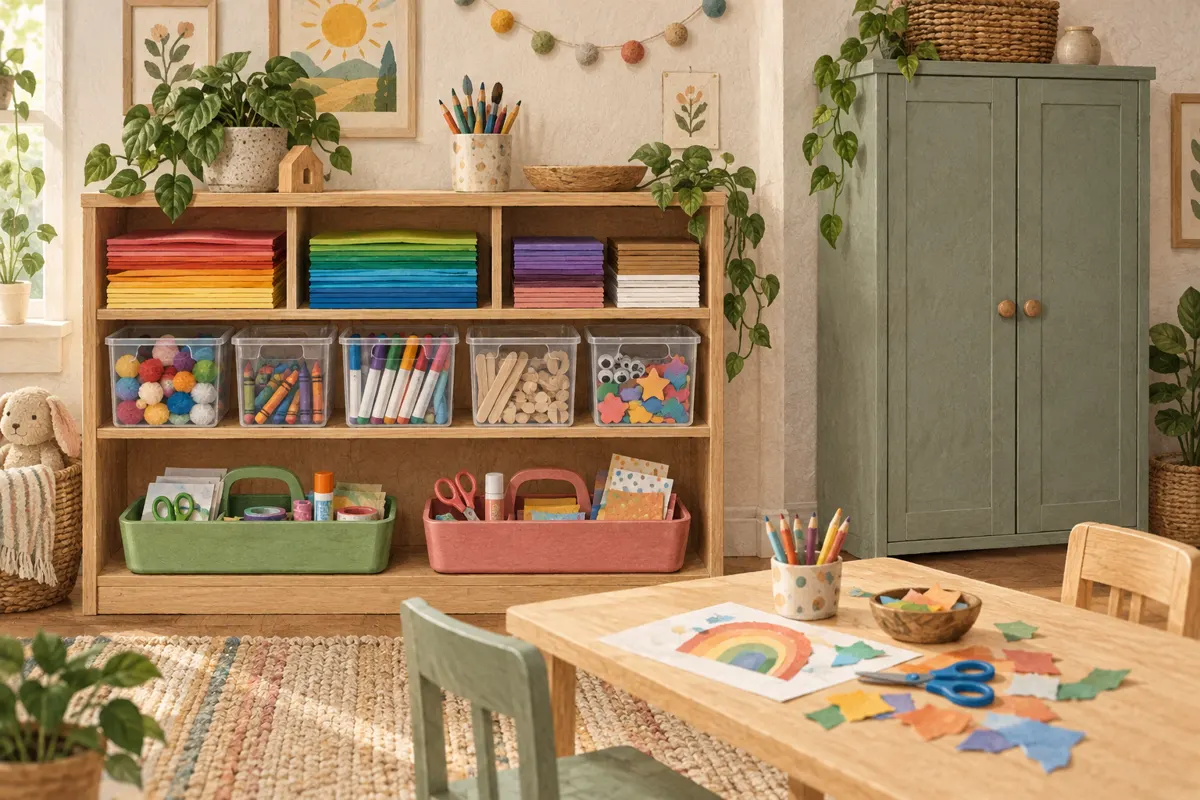
Organize shared craft supplies by separating what children can use independently from materials that need adult help. Keep everyday supplies near the crafting table, give each child a portable project tray, and make cleanup follow the same short sequence every time. Older children can still access materials suited to their projects without leaving everything within a younger sibling’s reach.
Sort what you have before choosing containers
Gather supplies from drawers, bedrooms, school bags, and cupboards in one place. Sort them into broad groups: drawing tools, paper, paint, glue, stickers, and project materials. This gives you a clear view of duplicates and helps you decide how much storage each category needs.
- Remove dried-out markers, empty glue containers, and materials that are no longer usable.
- Set aside usable supplies your children have outgrown or no longer want.
- Keep unfinished projects separate so their pieces do not disappear into general storage.
- Check the available shelf or cupboard space before choosing bins.
Reuse suitable containers you already own. Try them on the shelf with supplies inside before buying more. A container should fit its contents and leave enough room for children to take it out and return it easily.
Separate supplies by the help each child needs
Age suitability matters more than keeping every material of the same type together. Check product age guidance and directions, then consider what each child can handle. Our proposed arrangement uses three access groups, which you can adjust as children develop new skills.
- Shared everyday supplies: paper, coloring tools, and other materials appropriate for every child who can reach the storage.
- Ask-first supplies: materials that a particular child uses with adult help, kept in adult-controlled storage.
- Older-child supplies: specialized tools and small project pieces, stored separately where younger siblings cannot access them.
A name label identifies ownership; it does not control access. Choose storage accordingly. For shared sessions, bring out materials suited to the children taking part and keep the rest put away. If an older child needs additional supplies, set up a separate work area.
Give everyday materials an easy-to-find home
Choose one main storage spot close to where crafting happens. A cupboard, shelf, or portable cart can work. Keep categories broad enough that children can return supplies without sorting every pencil by color.
Use clear bins for loose materials and upright holders for paper or coloring books. Add word labels and simple pictures for children who are not reading yet. Place each label where it remains visible when the container is stored.
Our proposal is to keep a modest selection of everyday materials accessible and store refills separately. Leave some space in each bin so returning supplies does not require careful packing. If a lid or stacked container makes cleanup difficult, simplify that part of the arrangement.
Use a tray to carry each project
Portable containers let supplies travel from storage to the table together. Our proposal is one lightweight tray per child or active project. Choose a size the child can carry comfortably, and let an adult move anything heavy or awkward.
- Choose the activity and gather only the materials needed for it.
- Put loose pieces in a small container on the tray.
- Carry the tray to the work area and keep shared tools within agreed reach.
- Return reusable supplies afterward, leaving unfinished work on the tray if space allows.
Give unfinished projects a designated parking spot. Keep wet work somewhere appropriate to dry before stacking or covering it. Agree on which supplies belong to everyone and which project pieces should stay with their maker.
Teach one repeatable cleanup routine
Show children where each category belongs, then practice putting supplies away together. Our proposed routine is short enough to repeat after every session:
- Save the project in its designated spot.
- Close containers and return tools to their labeled homes.
- Collect scraps and discard what cannot be reused.
- Clean the work surface with adult help as needed, then return the tray.
Match cleanup jobs to each child’s ability. One child might collect paper while another checks marker caps. Review crowded bins and neglected supplies occasionally, and check existing stock before adding more. When the same item repeatedly ends up in the wrong place, make its storage easier to recognize or reach.