How to roast vegetables together when they cook at different speeds
· Editorial team newsfromportland7.com
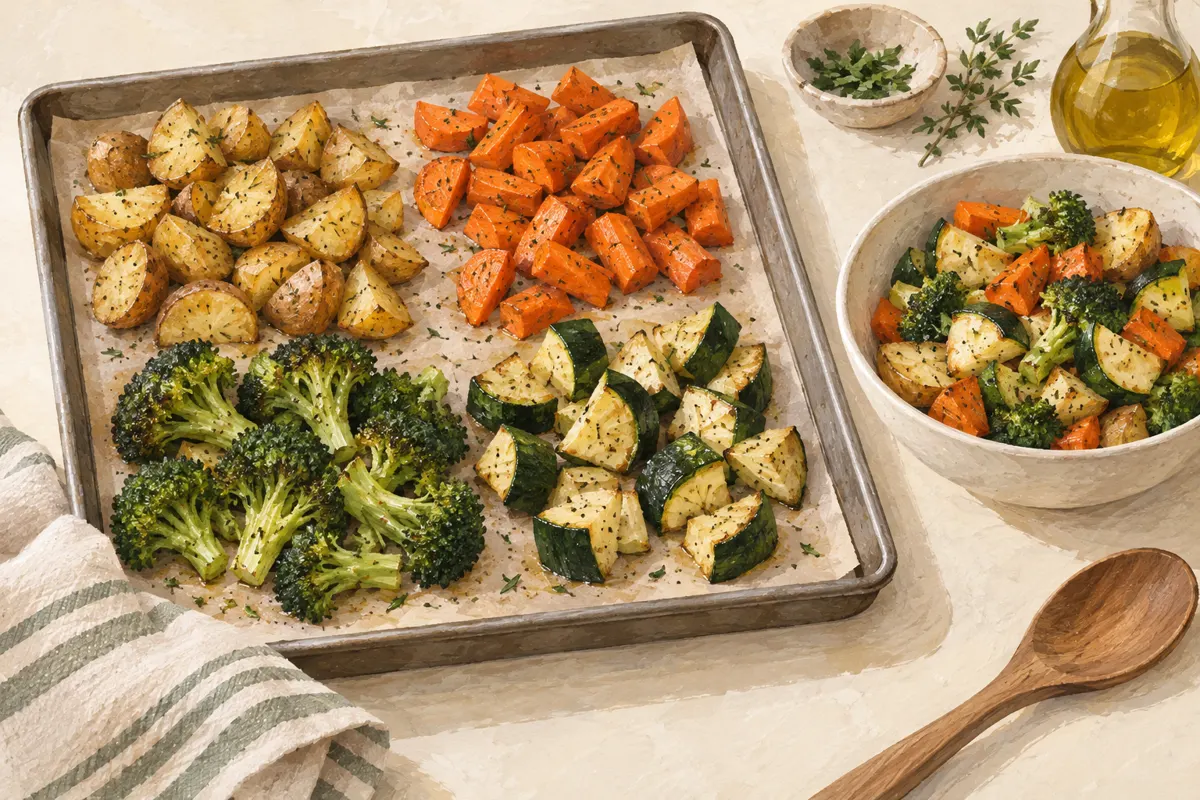
Roast mixed vegetables more evenly by cutting dense vegetables smaller and giving them a head start, then adding quicker-cooking vegetables later. Keep everything in a single layer with space between pieces, and check each type for tenderness and browning before removing it.
Group vegetables by how long they need
Before chopping, sort your vegetables into slower and faster groups. Potatoes and carrots usually need longer than broccoli, while zucchini and asparagus can finish quickly. These differences matter more than getting every vegetable onto the tray at the same moment.
- Slower vegetables: potatoes, beets, carrots, and other dense roots. At 425°F, allow roughly 30–45 minutes.
- Middle group: broccoli, cauliflower, and Brussels sprouts. At 425°F, allow roughly 15–25 minutes.
- Faster vegetables: zucchini, bell peppers, asparagus, and green beans. At 425°F, allow roughly 10–20 minutes.
Use those ranges as planning guides, not deadlines. Piece size changes the timing, and onions can need different treatment depending on their cut and your preferred browning. Similar vegetables, such as broccoli and cauliflower, are easier to manage together.
Use piece size to narrow the timing gap
Uniform cutting means keeping pieces of each vegetable reasonably consistent; it does not mean cutting every variety into identical cubes. Dense vegetables benefit from smaller pieces, while faster-cooking vegetables can stay larger. This helps bring their finishing times closer together, although it may not eliminate the need for staged roasting.
- Cut potatoes and sweet potatoes into roughly 3/4-inch chunks.
- Split thick carrots lengthwise before cutting them into shorter pieces, so thick sections do not lag behind thin ones.
- Halve Brussels sprouts and divide broccoli or cauliflower into similarly sized florets.
- Cut thick broccoli and cauliflower stems smaller than the florets.
- Trim asparagus and green beans; they usually do not need chopping into small pieces.
Prepare the tray for browning
For the timing ranges above, preheat the oven to 425°F. Pat washed vegetables dry, then toss each cooking group separately with oil, salt, and pepper. Aim for a light, even coating of oil without puddles. Keeping the groups separate makes it easier to add them at the right time.
Spread vegetables in one layer with visible gaps. Leave room for later additions, or prepare a second sheet pan. A crowded tray encourages steaming and makes browning harder. For a mix heavy on zucchini or eggplant, separate pans are a useful option: their moisture can interfere with the results you want from potatoes and other roots.
Add faster vegetables in stages
Suggested sequence: for a mix of potatoes, carrots, broccoli, and zucchini, use the steps below as a starting plan. Adjust the additions after checking the vegetables already roasting; the aim is a shared finishing window, not an exact schedule.
- Start with the potatoes and carrots, spread loosely on the tray.
- After about 15–20 minutes, turn the roots and add the broccoli. Keep the groups in separate areas so you can check and remove them easily.
- About 5–10 minutes later, add the zucchini if there is enough space. Use another tray if the first would become crowded.
- Begin checking the full mix about 10 minutes after the last addition. Continue roasting whichever pieces still need time.
Check each vegetable before serving
Look for browned edges and a center that a fork can pierce easily. Test a larger piece of each vegetable, especially potatoes and carrots. Color alone does not tell you whether a dense piece is tender inside.
Remove finished vegetables while the rest continue roasting. If one side of the tray browns faster, rotate it; when using two pans, switch their upper and lower positions partway through cooking. Combine everything after roasting, then add delicate fresh herbs if desired. Next time, cut any slow pieces smaller or give that vegetable a longer head start.